A brown stain or a sagging ceiling means water. We respond fast, find the real cause, and repair it cleanly with a detailed written estimate. Call the owner directly.
A water stain on the ceiling is never just cosmetic. It means water reached the plaster, and left alone it will spread, sag and eventually come down. The homeowners who call us fastest keep the smallest, cheapest repair. The ones who wait end up replacing whole sections.
Ezra Plastering responds quickly to water-damaged ceilings across Greater Boston. The owner answers, we assess the damage, make sure the source is handled, and repair the plaster cleanly so there is no lingering stain and no return of the problem. Written estimate, home left clean.
A brown or yellow ring on the ceiling is dried mineral residue left by water that came through from above: a roof leak, an ice dam, a bathroom above, or a failed pipe. Bubbling paint, soft plaster or a sag means the water is still doing damage. The stain is the symptom; the leak is the cause, and both have to be dealt with.
First we make sure the water source is identified and stopped, so we are not repairing over an active leak. Then we remove the failed material, let the area dry, rebuild the plaster or ceiling, and blend it back so the repair disappears. Finally we seal and finish so the old stain never bleeds back through.
A lot of the ceiling damage we repair in Greater Boston comes from ice dams: snow melts, refreezes at the eaves, and forces water back under the roof and into the plaster. If you see stains appear after a hard freeze, that is usually why. We repair the damage and can point you to the roofing fix so it does not repeat.
With water, speed is the difference between a patch and a replacement. We answer quickly, prioritize active damage, and can often get you a same-week estimate. You call the owner directly, not a call center.
Cost depends on how far the water spread, whether the plaster is salvageable, the ceiling height and whether there is structural damage above. We assess it honestly and put the full scope in writing before any work. See our guide on how to fix a water-damaged plaster ceiling.
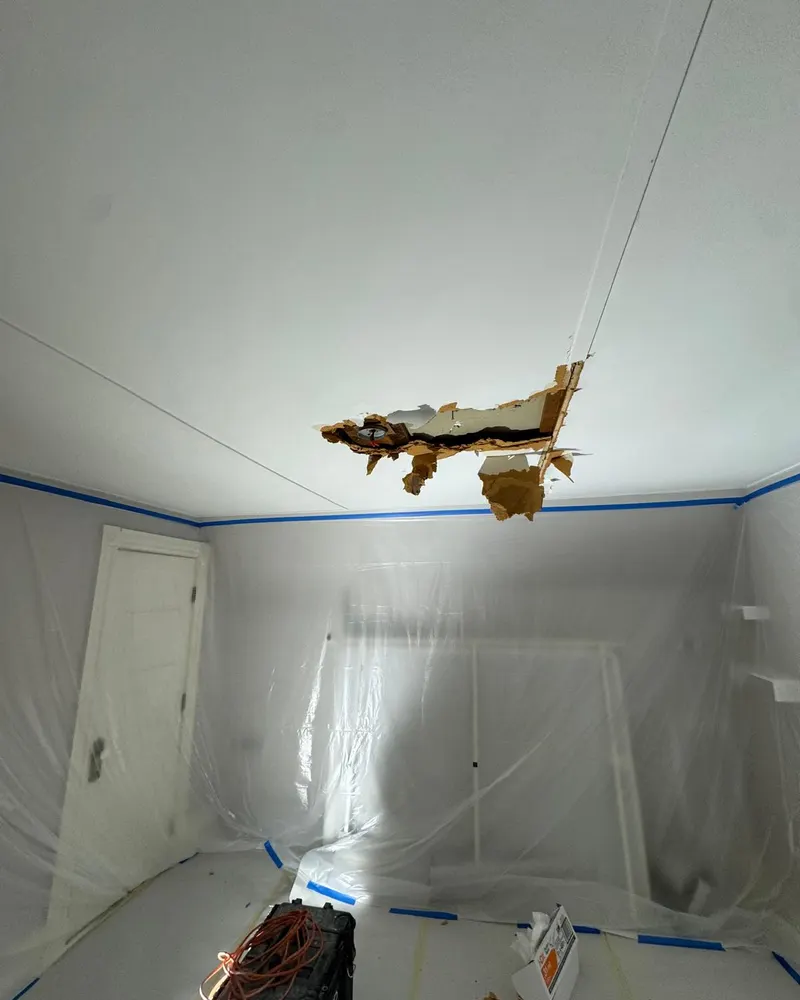
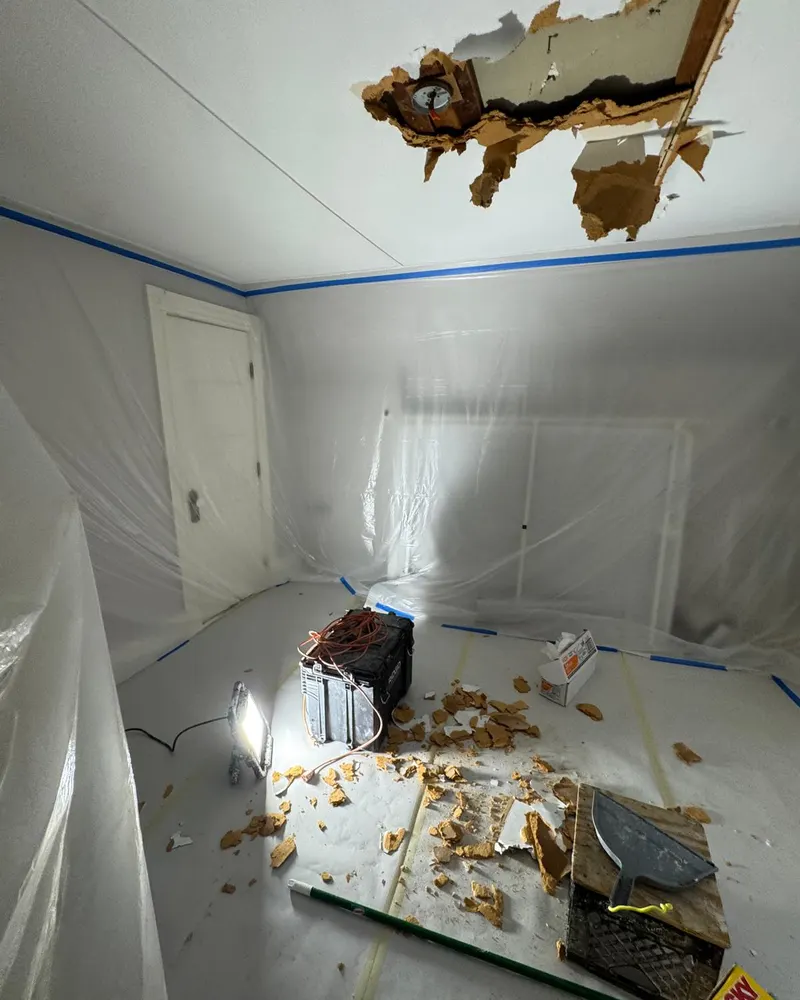
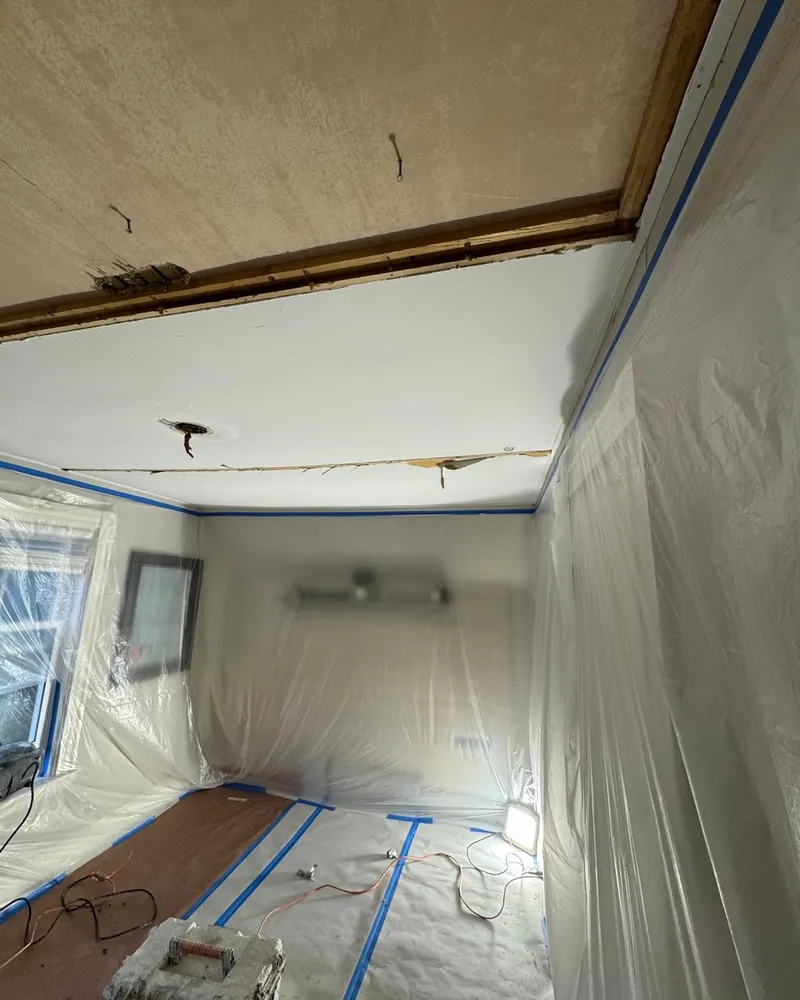
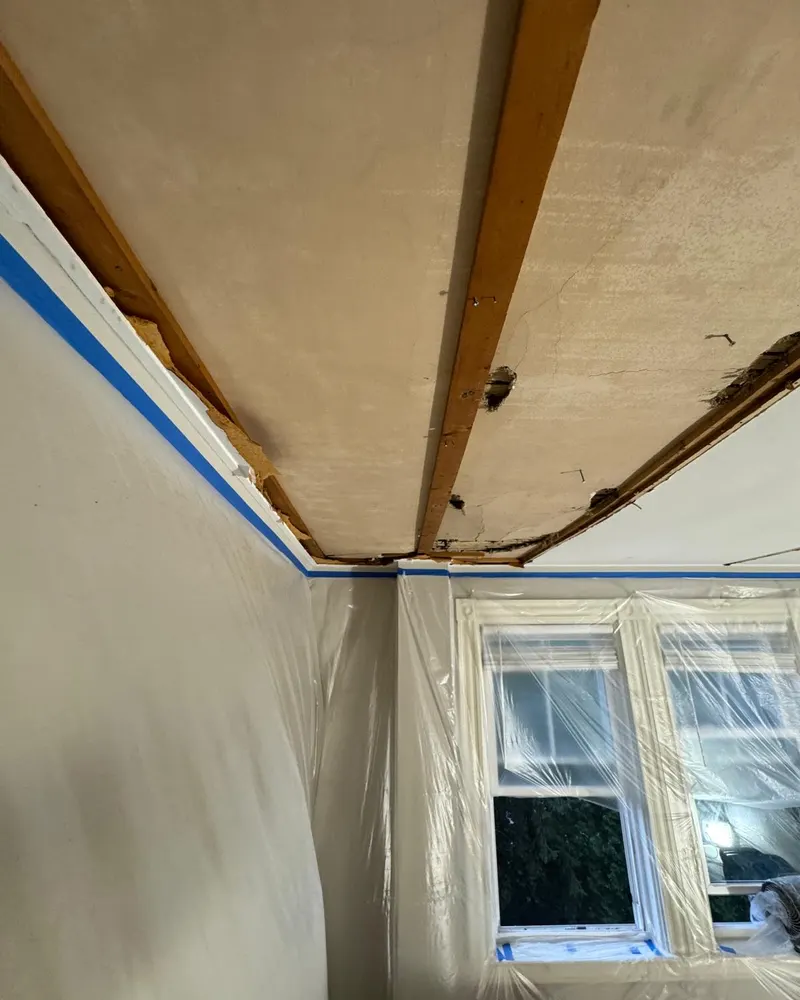
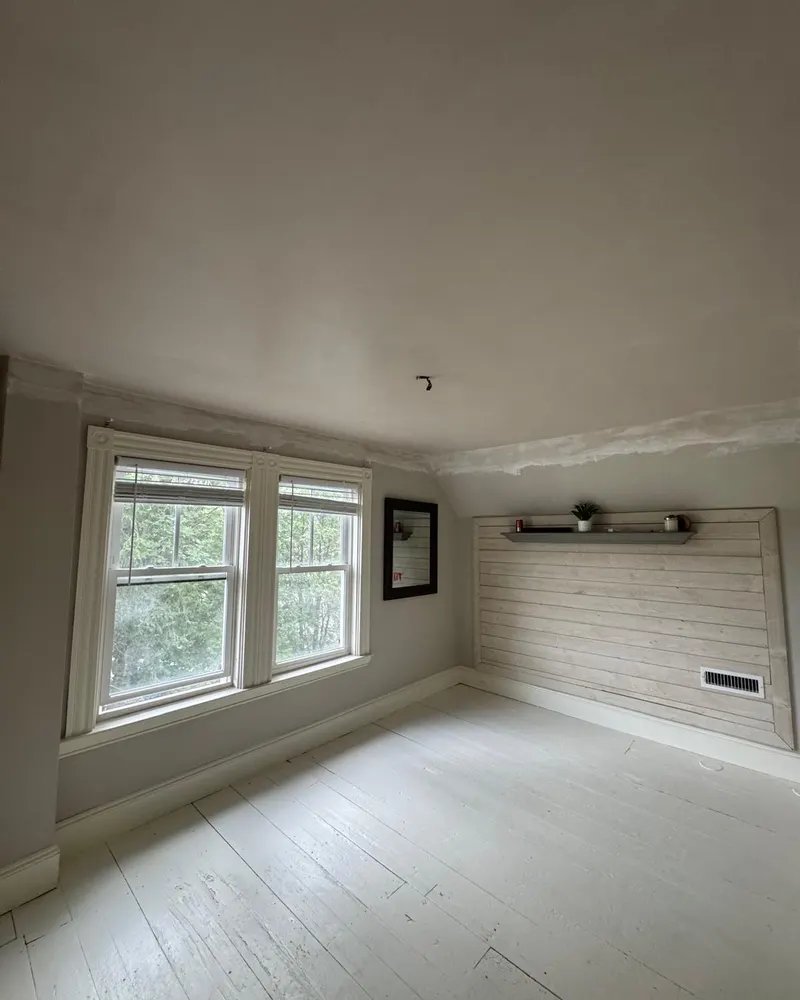
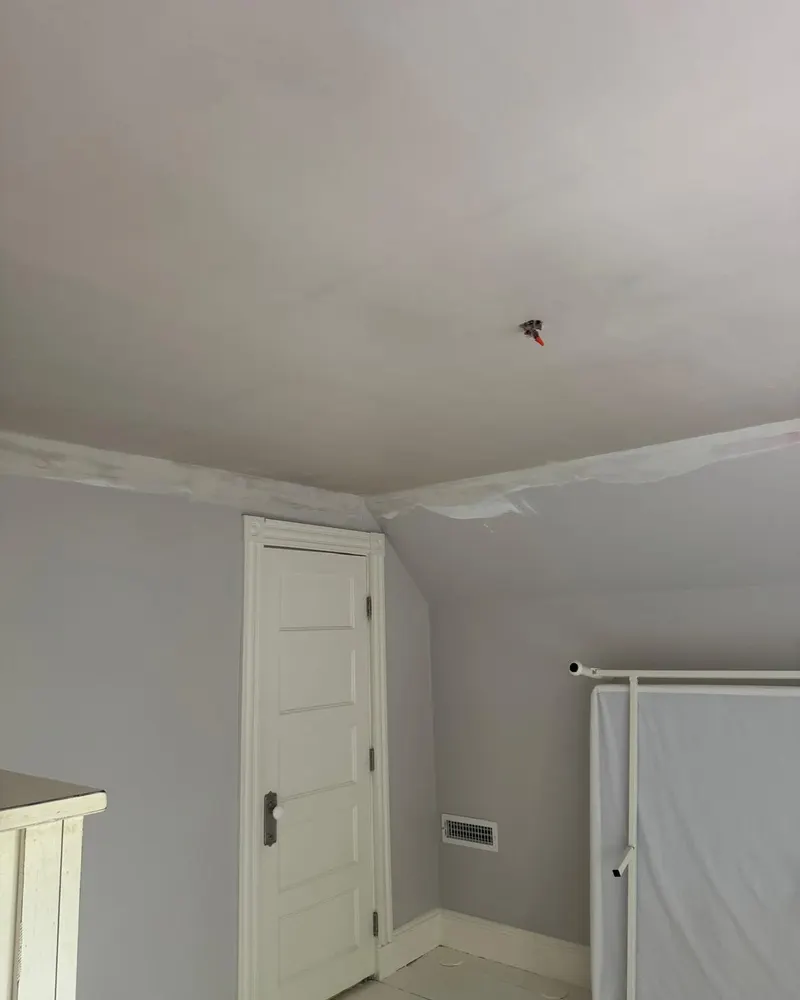
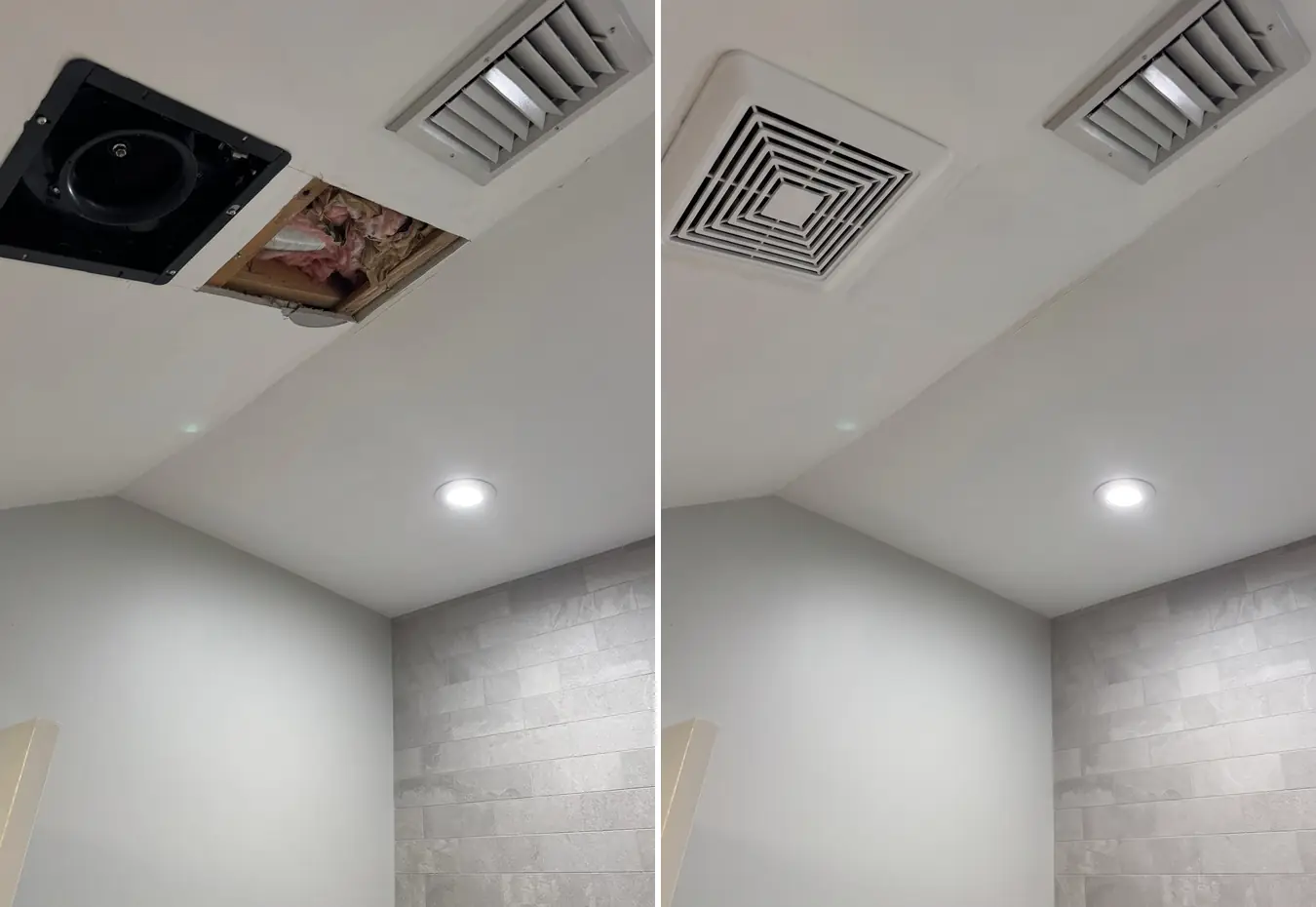
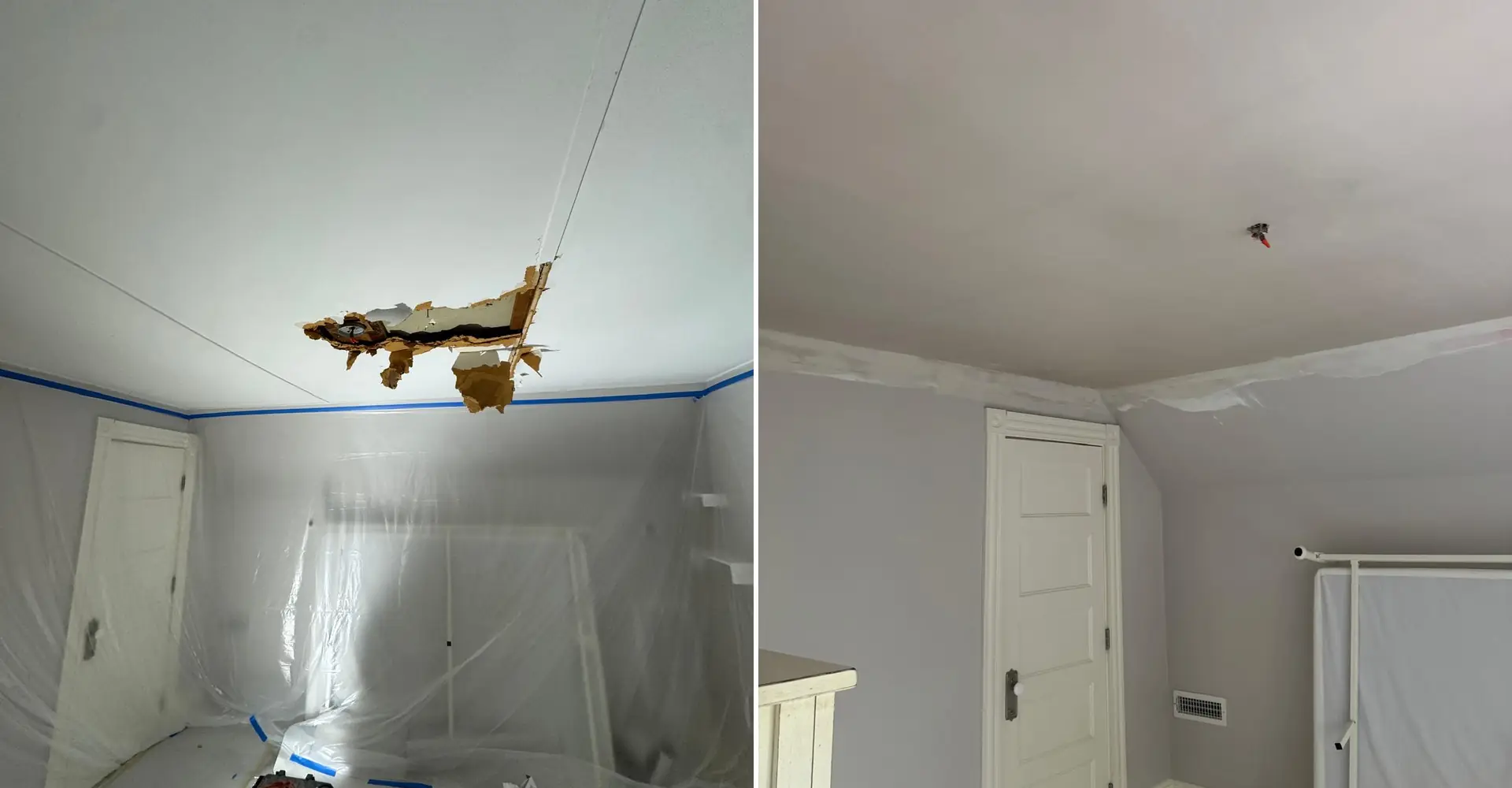
Real photos from a water damaged bedroom ceiling we opened, rebuilt and finished.


A brown ring or a sagging patch on a ceiling almost always means water found a path in: a roof leak, a failed flashing, a burst pipe, or, very common in Greater Boston, an ice dam building up at the eaves in winter and forcing melt water back under the shingles.
The finish repair is only half the job. If we skim over a ceiling while the source is still active, the stain and the sag come right back. So we find and confirm the source is fixed first, let the area dry fully, treat any staining so it does not bleed through the new finish, and only then repair and skim the plaster.
Because water damage rarely waits, the owner responds quickly and gives you a written scope fast, so you know what it takes and what it costs before the damage spreads.
The single biggest factor is whether the water source is fixed. If a roof, pipe or ice dam is still active, no ceiling repair will hold, so the first cost is often a small one: finding and confirming the leak is stopped and the area is dry.
From there the price tracks the size of the damage, whether the plaster can be re-secured and skimmed or has to be rebuilt, and how much staining has to be sealed so it does not bleed through the new finish. A single stained patch is a modest repair; a sagging, saturated section over a whole room is a bigger job.
We give you a detailed written estimate up front, and because water damage tends to spread, the owner responds quickly so it does not get worse while you wait for a quote.
Water rarely announces itself with a drip. Most of the ceilings we repair in Greater Boston showed quieter signs first, and catching them early is what keeps a repair small. Look up in every room after a heavy rain, a thaw, or any plumbing work upstairs.
Stains and rings. A yellow or brown ring with a darker edge is the classic sign. The edge is where the water stopped spreading and left minerals behind. Several rings inside each other usually mean the leak has come back more than once.
Bubbling or peeling paint. Paint lifts when moisture gets trapped between the plaster and the paint film. A blister that feels soft or wet to a light touch means water is still present.
Sagging or bowing. A ceiling that dips, even slightly, has lost its grip on the framing or the lath above. Treat this as urgent. Keep people and pets out from under it and do not push on it.
Cracks that appear suddenly. New cracks along a seam, a corner or across a stain often mean the plaster keys behind the surface are failing as the material swells and dries.
A musty smell. If a room smells damp and you cannot find the reason, the moisture may be in the ceiling cavity. That is worth checking before any finish work is done.
The first two days after you notice ceiling water damage shape everything that follows. You do not need to fix the ceiling yourself, but a few simple steps protect your home and make the repair easier and less expensive.
Stop the water if you can. If the source is a fixture upstairs, shut its supply valve or the main water valve. If it is a roof or ice dam, call a roofer. If water is pooling near light fixtures, turn off that circuit at the panel and keep away from it.
Relieve trapped water safely. A bulging blister full of water can let go all at once. Put a bucket under it and keep the area clear. If you are not comfortable handling it, leave it and call us.
Move and cover what you value. Furniture, rugs and electronics should come out from under the wet area. Lay plastic and towels to catch drips.
Take photos before anything is touched. Wide shots of the room, close shots of the stain and anything damaged below. Note the date and time. This is useful for your own records and for any insurance claim.
Start drying. Keep air moving with fans and run a dehumidifier if you have one. Do not paint over the stain. Paint traps moisture and hides the problem without solving it.
Then call us at (617) 461-7575. Esdras will look at what happened, tell you honestly what the ceiling needs, and follow up with a detailed written estimate.
A ceiling repair is only as good as the fix above it. We are plasterers, so we do not do plumbing or roofing ourselves, but we look carefully at where the water came from and we coordinate the repair after your plumber or roofer has solved the source. These are the causes we see most often in Greater Boston homes:
Plumbing leaks. Supply lines, drain joints, radiator valves and old pipes inside the ceiling cavity. Plumbing stains often appear in the same spot after a shower or when a fixture is used.
The bathroom upstairs. Failed grout, a cracked tub surround, worn caulk at the tub or shower base, or a leaking toilet seal can send water through the floor and into the ceiling below over months.
Roof leaks and flashing. Missing shingles, flashing around chimneys and vents, and old skylights let rain in during storms. These stains usually grow after heavy, wind-driven rain.
Ice dams. In New England winters, heat escaping into the attic melts snow on the roof. The water refreezes at the cold eaves and backs up under the shingles, then leaks into top-floor ceilings and exterior wall corners.
Attic condensation. Poor ventilation and missing insulation can create condensation that drips onto the ceiling. This often shows up as many small stains rather than one big one.
Air conditioning. A clogged condensate line or an overflowing drain pan on an attic unit is a common summer cause of ceiling stains.
Once the source is confirmed fixed, we schedule the plaster work. That order matters, and it is the difference between a repair that lasts and one you pay for twice.
Wet plaster and wet framing do not look very different from dry ones once the surface stain has set. That is why we do not rely on a glance. Before we close up or finish a water damaged ceiling, we check moisture in the plaster, the lath and the framing where we can reach it.
Plaster and wood hold water longer than most homeowners expect. A ceiling can feel dry to the touch after a few days and still be holding moisture deep in the material. Finishing too soon is one of the main reasons stains come back, paint peels again or new plaster loses its bond.
Depending on how much water came through, drying can take a few days with good airflow, or longer for a saturated ceiling in a closed room. If we need to cut back a section to let the cavity breathe, we tell you why and keep that area clean and contained.
When the readings are where they need to be, we move to the repair. You will not be rushed into finishing a ceiling that is not ready.
Many homes in Boston, Newton, Brookline and Chestnut Hill still have their original ceilings, and repairing them well starts with knowing what you have.
Traditional plaster on wood lath. Older houses often have plaster applied over thin strips of wood. The plaster pushes through the gaps and forms keys that hold the ceiling up. Many of these ceilings were mixed with animal hair, known as horsehair plaster, which adds strength. Water softens the plaster and can break those keys, which is why an old ceiling can sag after a leak.
Blueboard and veneer plaster. Many later homes in the area use blueboard panels with a thin, hard coat of veneer plaster on top. It is tougher than drywall and very common across Greater Boston. Learn more about blueboard and veneer plaster.
Drywall. Standard gypsum board with joint compound. When drywall gets soaked, the paper face and core often weaken, and the damaged section is usually replaced rather than saved.
We do not force one material onto another. If your ceiling is plaster, we repair it as plaster so it matches in hardness, texture and the way light falls across it. If your home has historic detail, our plaster ceiling repair work is built around keeping as much original material as is sound.
Not every water damaged ceiling needs to come down. Often the best result for your home and your budget is to keep everything that is still sound and rebuild only what failed. Here is how we look at it.
Repair usually makes sense when the stain is limited to one area, the plaster is still firmly attached, the lath or board behind it is solid once dry, and the rest of the ceiling is in good shape.
A larger rebuild may be needed when the plaster has lost its keys across a wide area, the ceiling sags or has already partly fallen, the lath or board is broken or rotted, or there have been repeated leaks in the same place over the years.
Re-securing is often an option. On older plaster ceilings, loose sections can sometimes be fastened back to the framing and then skimmed, which saves the original ceiling instead of tearing it out.
We cut into the ceiling only where we need to see, explain what we find, and give you the options with honest tradeoffs in a detailed written estimate. You decide with the full picture.
Every ceiling is different, but a proper water damage repair follows the same careful sequence. Skipping steps is what leads to cracks, stains and peeling a year later.
1. Protect the room. We cover floors and furniture, seal off doorways with plastic and set up so dust stays where the work is.
2. Remove loose and failed material. Crumbling plaster, soaked board and blistered paint come off until we reach material that is solid and well bonded.
3. Consolidate and secure. Sound edges are stabilized. Loose plaster that can be saved is fastened back to the framing. Damaged lath or board is replaced where needed.
4. Seal the stain. Water stains bleed through ordinary paint. We treat them with a stain blocking primer so they do not ghost back through the finish.
5. Base coat. We rebuild the depth of the ceiling with a base coat that bonds to the old work and gives the finish a strong foundation.
6. Finish coat. A smooth finish coat brings the patch flush with the surrounding ceiling so the edges disappear.
7. Prime and paint. Once the plaster has cured, the area is primed and painted, or left ready for your painter, so the ceiling reads as one surface.
8. Match the texture. Smooth, sand finish or older hand textures are matched so the repair does not stand out under daylight or overhead lights.
The hardest part of any ceiling repair is not the patch itself. It is making it invisible. Ceilings are lit from windows at low angles, and that light shows every ridge and every change in texture.
For small and medium repairs, we feather the new plaster out past the damaged area and match the existing texture, so the transition is gradual rather than a hard edge.
When a ceiling already has old patches, hairline cracks or uneven areas, it can make more sense to skim coat the whole ceiling. A skim coat is a thin, continuous layer of plaster across the entire surface. The result is one uniform finish, and the water damage repair simply becomes part of a ceiling that looks new.
We will tell you plainly which approach fits your room. Sometimes a careful patch is the right call. Sometimes a full skim gives you a far better result for a modest step up in scope.
Water damage is stressful enough. You should not also have to deal with dust in every room. A clean job site is one of the things we plan for from the first visit.
We protect floors with coverings, seal off the work area with plastic sheeting, and keep doorways closed off so dust does not travel through the house. Furniture that cannot be moved is wrapped. Debris is bagged and removed as we go, not left in a pile.
At the end of each day the work area is cleaned up, and at the end of the job we leave the room ready to use. If you have children, pets, or someone working from home, tell us. We will plan the work around it.
Esdras is on site with the crew, so the standard of care you hear about at the estimate is the one you get on the job.
Every project depends on how much water came through and what the ceiling is made of, but most repairs follow a similar rhythm.
Assessment. We come out, look at the damage and the source, and follow up with a detailed written estimate. For active water damage we aim to move quickly and can often provide a same-week estimate.
Source fixed and drying. Your plumber or roofer resolves the leak. The ceiling then needs time to dry. We confirm moisture levels before finishing.
Repair days. A single stained patch can often be repaired in a short visit, with a return trip for finish and paint after the plaster cures. A larger section or a whole room skim coat takes longer, because each coat needs time to set properly.
Finish and walkthrough. Once primed and painted, we walk the room with you so you can see the result in good light.
We give you a realistic schedule up front and keep you informed if anything changes, such as extra drying time.
We do not quote ceiling repairs over the phone, because two stains that look the same in a photo can be very different jobs once we see the ceiling. These are the factors that shape the scope and the estimate:
How far the water spread. A small stain near a fixture is a different job from a saturated area across a whole room.
Ceiling material. Traditional plaster on lath, blueboard with veneer plaster and drywall are each repaired in a different way.
Whether the plaster can be saved. Re-securing and skimming sound plaster is usually less work than rebuilding sections from the lath up.
Height and access. High ceilings, stairwells and rooms full of furniture need more setup.
Decorative detail. Crown moldings, cornices and medallions take skilled time to repair and match.
Finish level. A patch blended into the existing ceiling or a full skim coat of the room.
Everything is laid out in a detailed written estimate before work starts, so you know exactly what is included.
Many homeowners ask whether water damage is covered by their homeowner insurance. That depends on your policy and on what caused the leak, so the right person to answer is your insurance agent or adjuster. What we can do is help you have clear information.
Photos. Take pictures as soon as you see damage and before anything is removed. We also take photos of what we find when we cut into a ceiling, and we are happy to share them with you.
A detailed written estimate. Our estimate describes the damage, the materials involved and the repair scope in plain language. Many homeowners share it with their adjuster as part of their claim.
Records from other trades. Keep the invoice or report from your plumber or roofer showing the source was fixed. That is often an important part of a claim.
We do not manage insurance claims or negotiate with insurers on your behalf, but clear documentation from the start makes the process easier for you.
Once your ceiling is repaired, a little prevention goes a long way. Most of what causes ceiling water damage in New England can be caught early.
Watch for ice dams. Large icicles and thick ice along the eaves are warning signs. Attic insulation and ventilation, handled by an insulation or roofing pro, help keep the roof cold and reduce ice dams.
Check the bathroom above. Look at the caulk around the tub and shower base, the grout and the area around the toilet a few times a year. Re-caulk when it cracks or pulls away.
Keep an eye on stains. Look up after storms, thaws and plumbing work. A small new mark caught early is a much smaller repair.
Service the AC. If you have an attic air handler, make sure the condensate line and pan are kept clear.
Know your shutoff. Make sure everyone in the house knows where the main water valve is.
In Boston and Brookline, a lot of the water damage we see comes from the unit upstairs: an overflowing tub, a leaking washer or a failed pipe in a shared wall. These jobs have a few extra steps.
First, the source usually sits in someone else's unit, so the upstairs owner, the building management or the association typically has to arrange the plumbing fix. Second, many buildings have rules on work hours, elevator use and debris removal. We follow them and plan around them.
We can provide a detailed written estimate for the ceiling in your unit, coordinate access with you, and keep the work clean so the job does not disturb your neighbors. Once the source is fixed and the ceiling is dry, we repair it so it matches the rest of your home.
Bathroom ceilings deal with steam every day, and many water stains below a bathroom actually come from the room above. When we repair a bathroom ceiling, we pay attention to moisture resistant materials, proper priming and a finish that holds up to humidity. A working exhaust fan is the best protection for the repair afterward.
Kitchen ceilings often get damaged from a bathroom or laundry above, or from a dishwasher or sink line in the floor of the room upstairs. Kitchens have cabinets, lights and appliances close to the ceiling, so we take extra care to protect finishes and keep dust out of cabinets and counters.
In both rooms, we make sure the stain is sealed properly before finishing so it does not reappear under the paint.
Older homes in Brookline, Newton, Chestnut Hill and Boston's historic neighborhoods often have plaster cornices, crown molding and ceiling medallions. Water can soften these details, crack them or cause sections to fall away.
Plaster detail can often be repaired rather than replaced. Missing pieces can be rebuilt by running a profile that matches the original shape, and damaged sections can be consolidated and blended back in. The goal is that you cannot tell where the original stops and the repair starts.
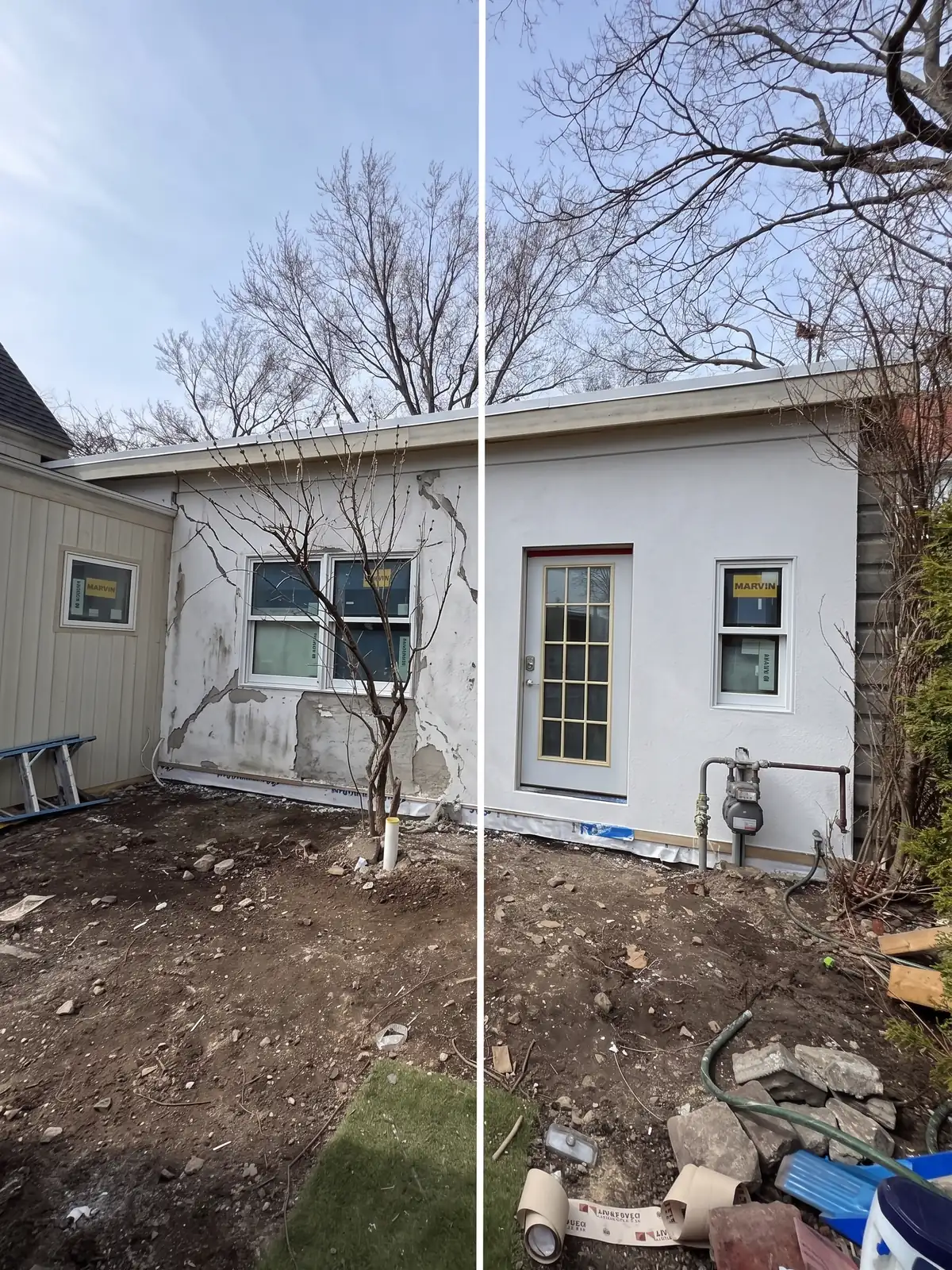
If your ceiling has decorative plaster, let us know when you call so we can look at it closely during the estimate. You can also read more about our plaster ceiling and detail repair. For exterior water damage around entries and walls, see our stucco repair service.
Water and time can lead to mold, especially in a ceiling cavity that stayed wet. If you see fuzzy growth, dark spotting that spreads, or the room has a strong musty smell, it is worth having it looked at by a mold remediation specialist before any repair.
We are plasterers, not a remediation company. If we see signs of mold when we assess or cut into a ceiling, we will tell you and recommend you have it evaluated and handled by a specialist. Once that work is done and the area is dry, we come back and rebuild the ceiling.
Drying a ceiling promptly after a leak is the best way to keep mold from becoming a problem in the first place.
Ezra Plastering repairs water damaged ceilings for homeowners throughout Greater Boston. We regularly work in Boston, Newton, Brookline, Chestnut Hill, North Reading and Melrose, along with nearby towns.
From Victorian homes with horsehair plaster to newer houses with blueboard and veneer plaster, we repair the ceiling with the same material and the same care it was built with. We are fully insured, the owner is on site with the crew, and every job starts with a detailed written estimate.
If you see a stain, a bubble or a sag, call or text (617) 461-7575. The sooner we see it, the smaller the repair tends to be.
Yes. A stain means water reached the ceiling. The sooner it is assessed, the smaller and cheaper the repair. Waiting risks sagging, mold and full replacement.
We make sure the water source is identified and stopped first. Repairing over an active leak just wastes your money. We can coordinate the timing so the repair holds.
Not when it is done right. We remove failed material and seal properly so the stain does not ghost back through the new finish.
We prioritize active water damage and can often provide a same-week estimate. Call or text the owner directly at (617) 461-7575.
We repair the ceiling and plaster. Plumbing and roofing are handled by a plumber or roofer. We look at where the water came from, explain what we see, and coordinate the repair after the source has been fixed.
It depends on how much water came through. A small area with good airflow can be ready in a few days, while a saturated ceiling can take longer. We check moisture before finishing so the repair holds.
Yes. We repair plaster with plaster, matching hardness and texture, and feather the repair so it blends. When a ceiling has many old patches, a full skim coat can give the most uniform result.
We protect floors and furniture, seal the work area with plastic, and clean up every day. Keeping your home clean is part of how we work.
We provide a detailed written estimate and photos of the damage we find, which many homeowners share with their adjuster. Coverage questions should go to your insurance agent.
Repair & RestorationCracks, sagging and old lath-and-plaster ceilings restored cleanly, on the day we promise.
Learn more
Repair & RestorationCracks, chimneys and exterior walls repaired to last, matching the original texture cleanly.
Learn more
Signature FinishMarble-like polished walls, applied by hand one layer at a time by the owner himself.
Learn moreTell us about your project. We put the scope and value in writing before any price, and the owner answers directly.
Four quick steps. The owner replies within one business day.
Prefer to talk? Call (617) 461-7575
One tap. Your call goes straight to the owner.
Or call now: (617) 461-7575