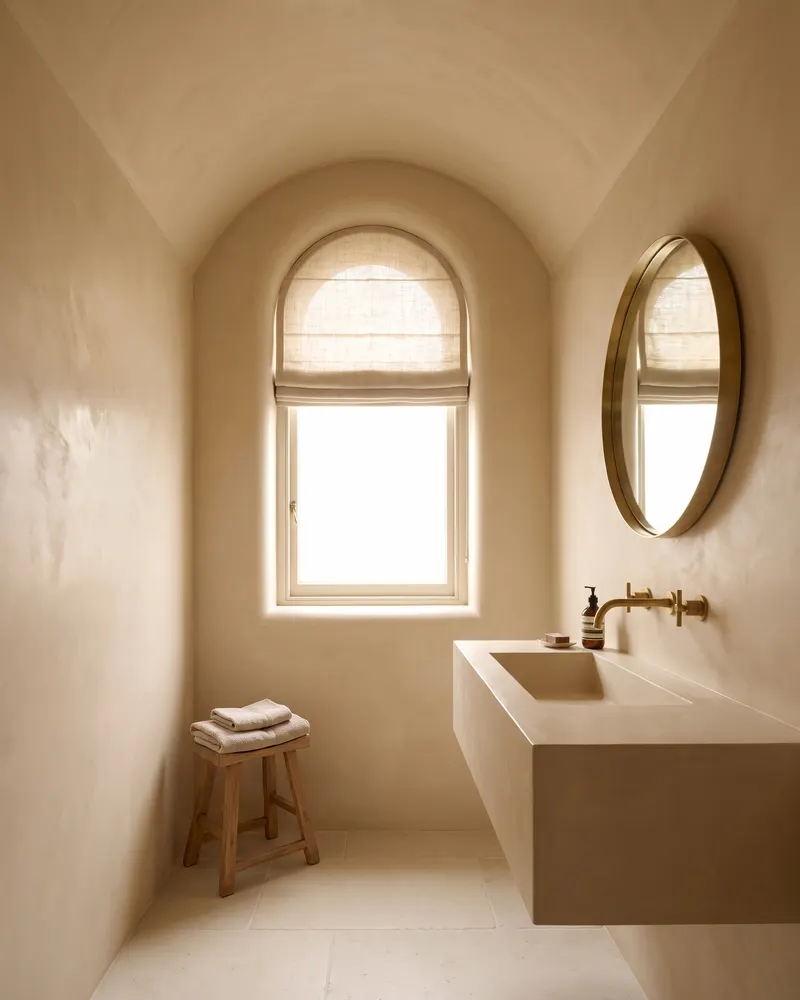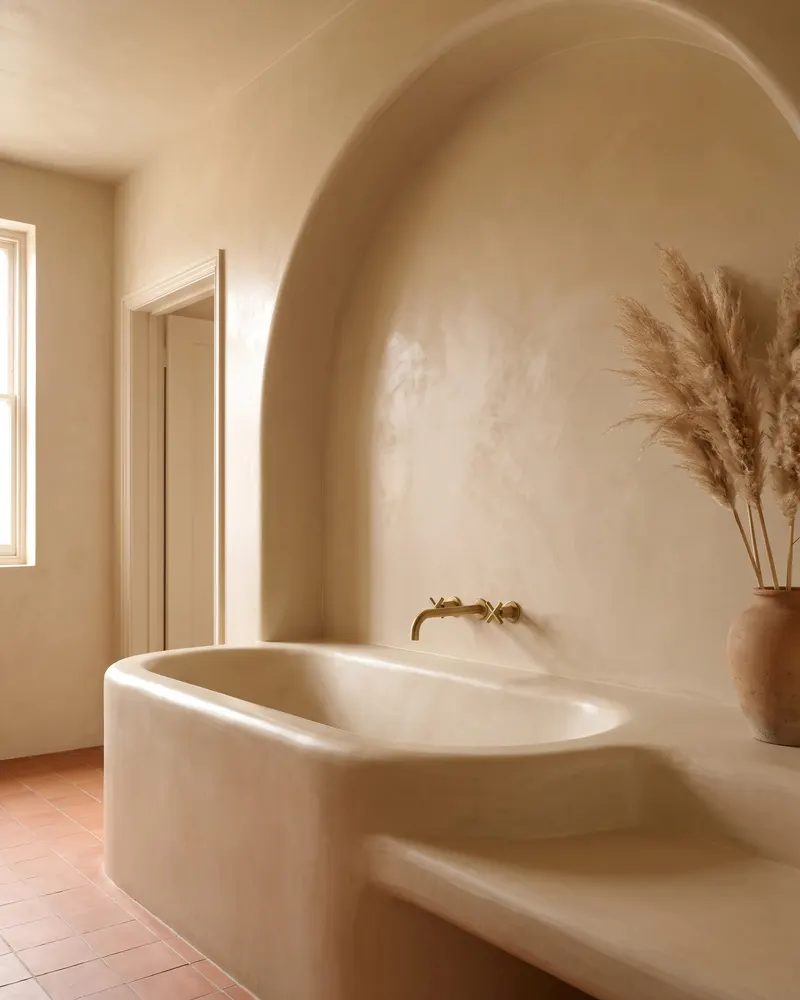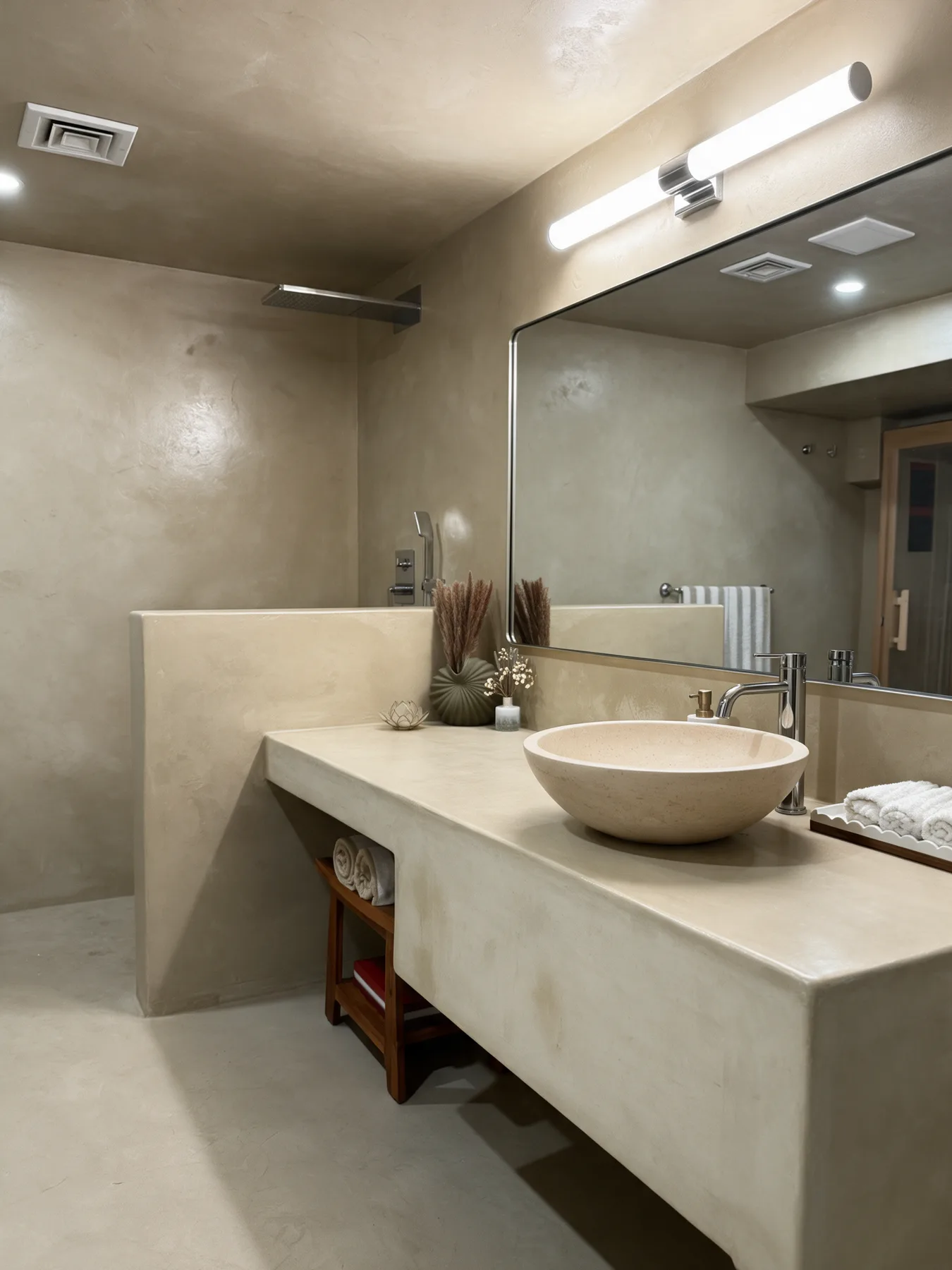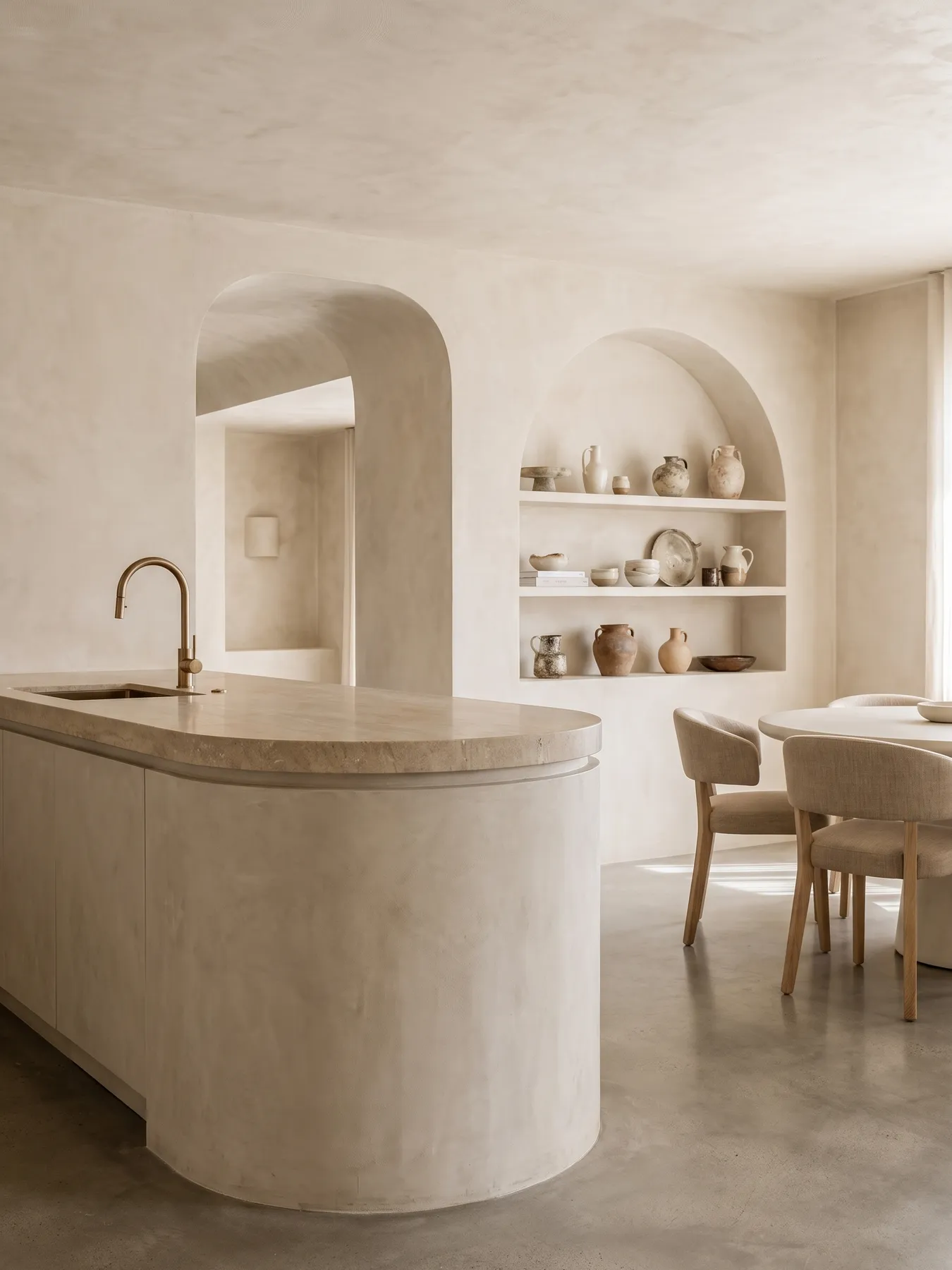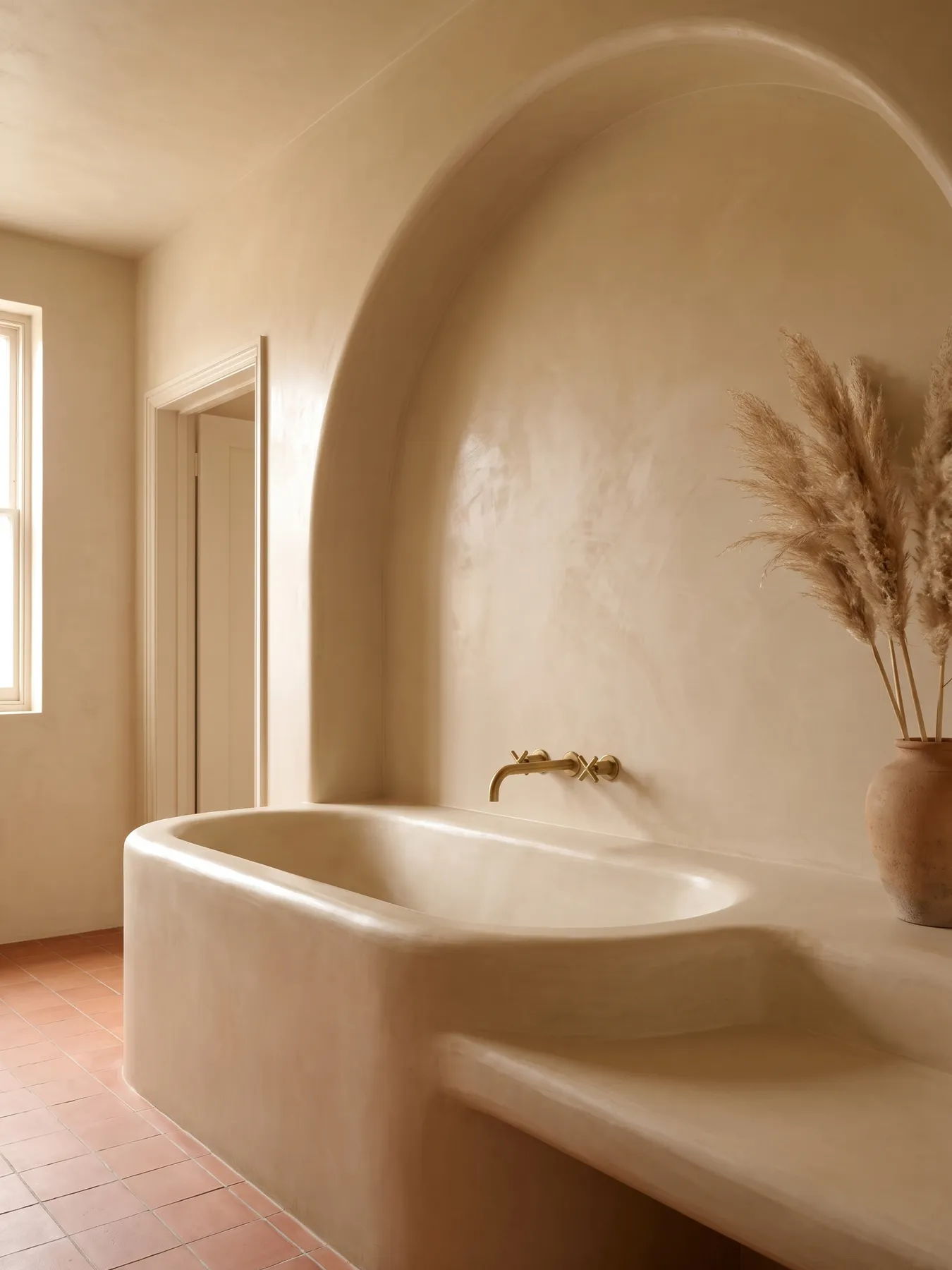
A shower made by hand, like a piece of art. The naturally waterproof Moroccan lime finish, polished with stone and sealed with soap. A rare craft for showers and wet rooms, applied by the owner.
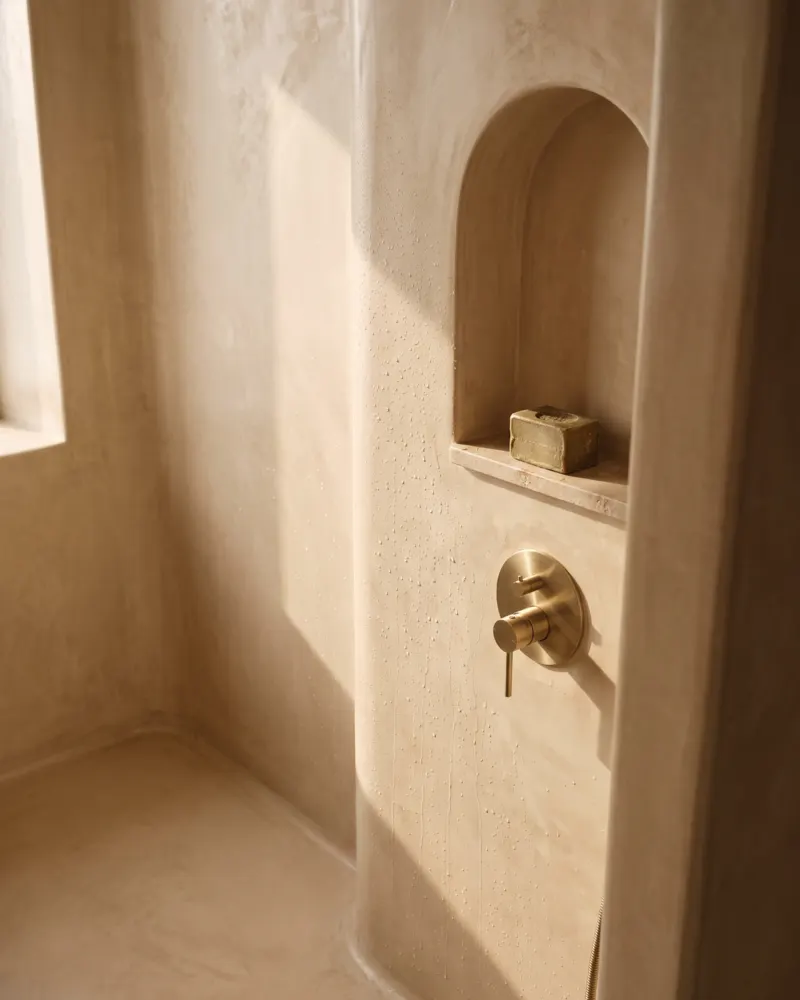
Tadelakt is one of the oldest and rarest finishes we offer: a Moroccan lime plaster, compressed with a smooth stone and sealed with natural soap until it becomes naturally waterproof. It has a soft, hand-made depth that no tile or paint can copy, and it is seamless, so there is no grout to fail.
Very few installers in Greater Boston can do authentic Tadelakt, because it is slow, physical and unforgiving. Ezra Plastering applies it the traditional way, by hand and by the owner, for showers, wet rooms and feature walls that are meant to be the centerpiece of the room.
Tadelakt is a lime-based plaster from Marrakech, traditionally used in hammams and bathhouses. It is applied in layers, then burnished with a hard stone and treated with olive-oil soap. That process closes the surface and makes it water repellent without any tile or membrane. The finish is smooth, slightly undulating and completely seamless.
Because the surface is sealed by burnishing and soap rather than a coating, Tadelakt is ideal for showers, soaking tubs and wet rooms. There is no grout to scrub, no joints to leak, and the walls feel warm and organic instead of cold and tiled.
Both are seamless and waterproof, but Tadelakt is a lime plaster with a soft, natural, hand-polished look, while microcement is cement based with a more uniform, contemporary finish. If you want warmth and craft, Tadelakt wins; if you want a precise modern surface in any color, microcement may fit better. Read the full comparison in Tadelakt vs microcement.
Tadelakt is pigmented with natural oxides, so it comes in warm earth tones, soft neutrals, deep greens and greys. The polish level can be adjusted from a soft matte to a stone-like sheen, depending on the room and the light.
We prepare the substrate, apply the lime plaster in coats, then do the physical work that defines Tadelakt: burnishing every inch with stone and sealing with soap. It cannot be rushed, and it cannot be handed to an untrained crew. The owner applies it, which is why the surface comes out consistent.
Design inspiration for the seamless, waterproof lime finish we polish by hand in showers, tubs and wet rooms.


Tadelakt is the traditional Moroccan lime plaster, polished with a stone and sealed with a natural olive-oil soap that triggers a chemical reaction, making the surface naturally water resistant with no grout lines at all. For a steam shower or a wet room, that seamlessness is the whole point: nowhere for mold and mildew to hide.
It is a slow, skilled craft. Each coat is worked and burnished by hand, and the final soaping has to be timed to the plaster's cure. Very few contractors in Greater Boston apply true tadelakt, which is exactly why homeowners who want an authentic finish come to an owner who applies it personally rather than sending an unfamiliar crew.
Maintenance is simple but specific: re-soap the surface a couple of times a year to keep the water resistance topped up. We leave every client with the exact soap and a two-minute routine so the finish lasts.
Tadelakt comes from Marrakech and the surrounding region of Morocco, where it was used for centuries to line hammams, fountains, cisterns and palace bathrooms. The name is usually traced to a Berber word meaning to rub or to knead, which describes the work better than any brochure could: the plaster is pressed, rubbed and polished by hand until it becomes dense and smooth.
The traditional material is a local lime from the Marrakech plains, burned and slaked so it can be worked as a plaster. After application it is compacted with a smooth stone and treated with black soap made from olive oil. That combination of lime, stone and soap is what gives tadelakt its soft glow and its resistance to water, and it is the same recipe the craft still relies on today.
A true tadelakt surface is built in stages rather than poured or rolled on. First the wall or shower is prepared so the base is solid, clean and suited to lime. Then the plaster goes on in coats, each one pressed with a trowel and allowed to firm up to the right point before the next step.
Once the final coat reaches the correct stiffness, the polishing begins. A hard, smooth stone is worked over every inch in small circles, closing the pores and compacting the surface. Then olive-oil soap is applied and polished in again, which reacts with the lime and leaves a water-repellent layer. Timing matters at every stage, so the work is planned around how the plaster is curing on the day, not around a clock.
Tadelakt is at its best in rooms where water and texture meet. The most common requests we see are:
Not every surface is a good candidate. Floors that take heavy foot traffic and kitchen counters exposed to acidic food usually call for a different material, and we will tell you so during the walkthrough.
Many older homes around Greater Boston were built with lime and plaster walls, and lime finishes tend to sit comfortably in those houses. Lime is vapor open, which means a wall can release moisture instead of trapping it behind a plastic film. In a bathroom that sees daily steam, that breathability is a real advantage.
In a Victorian or colonial home we look closely at what is behind the wall before suggesting tadelakt, because the substrate decides how the finish performs. If you live in the city or the close-in suburbs, see our work for plastering in Boston, plastering in Brookline and plastering in Newton, where period homes are part of everyday work.
Tadelakt cannot be rushed, and an honest timeline reflects that. A typical shower or bathroom project moves through a few phases: preparation of the substrate, application of the plaster coats, polishing and soaping, and then a curing period before the room goes back into full use.
Lime gains strength slowly as it reacts with air, so the surface keeps hardening for weeks after we leave. During the first stretch we ask clients to use the shower gently and follow the care routine we hand over. The exact schedule depends on the size of the room, the base we are working on and the conditions in the house, and we lay it out clearly in your detailed written estimate before work begins.
Tadelakt asks for gentle habits rather than hard work. Clean it with a mild, pH neutral soap or the same black soap used to finish it, and wipe or squeegee the walls after showering so water does not sit in one place.
Avoid acidic cleaners, vinegar, bleach and abrasive pads, because lime reacts to acid and harsh products wear down the polished layer. Every so often, depending on how much the room is used, the surface benefits from a fresh soap treatment or a natural wax to top up its water resistance. Small marks are part of the character of a hand-made finish, and many can be softened with a little soap and polishing.
Every tadelakt job is quoted on its own, because the factors that drive the work change from one bathroom to the next. The main ones are:
After a walkthrough, you receive a detailed written estimate that spells out the scope, so you can compare it with confidence.
Tile is a familiar choice and it has its place, but the experience of a tadelakt shower is very different. Tile relies on grout joints, and grout is where mildew, staining and slow leaks usually start. Tadelakt is one continuous surface, so there are no lines to scrub and the walls read as calm and uninterrupted.
Tile is harder and more forgiving of acidic products, while tadelakt asks for gentler cleaning. Tile tends to feel cool and uniform, while tadelakt feels warm, soft and slightly organic under the hand. If you love the idea of a seamless shower but want a more contemporary, uniform look, our microcement finishes are another option worth comparing.
Both are lime based, both are applied by hand and both can be polished to a beautiful sheen, so they are often confused. The difference is in purpose. Venetian plaster is a decorative wall finish built up in very thin layers, prized for its depth and marble-like movement, and it is usually meant for dry rooms such as living rooms, dining rooms and hallways.
Tadelakt is thicker, compacted with stone and sealed with soap so it can handle water. That is why it belongs in showers and tubs, while Venetian plaster brings the drama to walls and ceilings elsewhere in the house. Many homes use both. You can explore the decorative side on our Venetian plaster service page.
A little planning before we arrive makes the project smoother. Decide early on the layout of niches, benches and fixtures, because they are shaped as part of the plaster rather than added later. Make sure your plumber and any other trades have finished their rough work, and that the shower pan and waterproofing details are agreed in advance.
Good ventilation is important, so a working exhaust fan is worth confirming before the finish goes on. Clear the room of personal items, and plan for the bathroom to be out of use for the full application and early curing period. We protect floors and nearby rooms and contain dust, but knowing the plan ahead keeps your household routine easy.
Because few contractors offer authentic tadelakt, it pays to ask direct questions before you hire anyone:
At Ezra Plastering, the owner, Esdras, is on site and answers personally for the finish, which is the clearest answer to the second question on that list.
Lime is one of the oldest building materials in the world, and it brings some real benefits to a modern home. It is made from natural limestone, it reabsorbs carbon dioxide from the air as it cures, and it is naturally alkaline, which discourages mold growth on the surface.
Tadelakt is pigmented with mineral oxides and finished with soap made from olive oil, so the finished wall contains no plastic coating. For homeowners who care about what goes into their houses, that simplicity is part of the appeal, alongside the beauty of a surface that ages gracefully instead of peeling.
We apply tadelakt for homeowners throughout Greater Boston, including Boston, Newton, Brookline, Chestnut Hill, North Reading and Melrose. Whether you are renovating a primary bathroom in a period home or building a new wet room, the process starts with a walkthrough where we look at the space, talk about color and finish, and explain what the room needs.
Learn more about our work for plastering in Chestnut Hill, or reach out for a detailed written estimate for your tadelakt project.
Yes. The burnishing and natural soap treatment close the lime surface so it repels water, which is exactly why it has been used in Moroccan bathhouses for centuries. It does need simple care to stay that way.
Rinse and squeegee after use and reapply a natural soap treatment periodically. It is low effort, and we explain the routine when we hand over the job.
It is entirely hand applied and hand polished by a skilled installer, with no shortcuts. You are paying for a rare craft and a seamless, one-of-a-kind surface.
We tint Tadelakt with natural oxide pigments and can get close to most warm and neutral tones. We show samples before committing.
Lime keeps hardening for weeks after application. The shower can usually be used gently after the early curing period we set, and we give you the exact schedule in your detailed written estimate.
Sometimes, but it depends on how sound the tile and the wall behind it are. In many bathrooms removing the tile and preparing a proper base gives a far more reliable result, and we assess this during the walkthrough.
Avoid vinegar, bleach, acidic or abrasive cleaners and scouring pads. A mild pH neutral soap or black soap and a squeegee after use are all it needs.
Yes. We work across Greater Boston, including Newton, Brookline, Chestnut Hill, North Reading and Melrose.
Signature FinishSeamless, waterproof, modern surfaces for bathrooms, showers and floors. The finish designers ask for by name.
Learn more
Signature FinishMarble-like polished walls, applied by hand one layer at a time by the owner himself.
Learn more
Fast ResponseWater-stained or damaged ceiling? We respond fast, give you a detailed written estimate, and leave no mess behind.
Learn moreTell us about your project. We put the scope and value in writing before any price, and the owner answers directly.
Four quick steps. The owner replies within one business day.
Prefer to talk? Call (617) 461-7575
One tap. Your call goes straight to the owner.
Or call now: (617) 461-7575